Budapest · Sdot Yam · Yugoslavia and Hungary
Hannah Szenes
Hannah Szenes (also spelled Senesh) was born in Budapest in 1921, emigrated to Mandatory Palestine in 1939 and volunteered for the parachute mission that the Jewish community there sent into occupied Europe with the British. She was captured on the Hungarian border in June 1944 and executed in Budapest on 7 November 1944, aged 23.
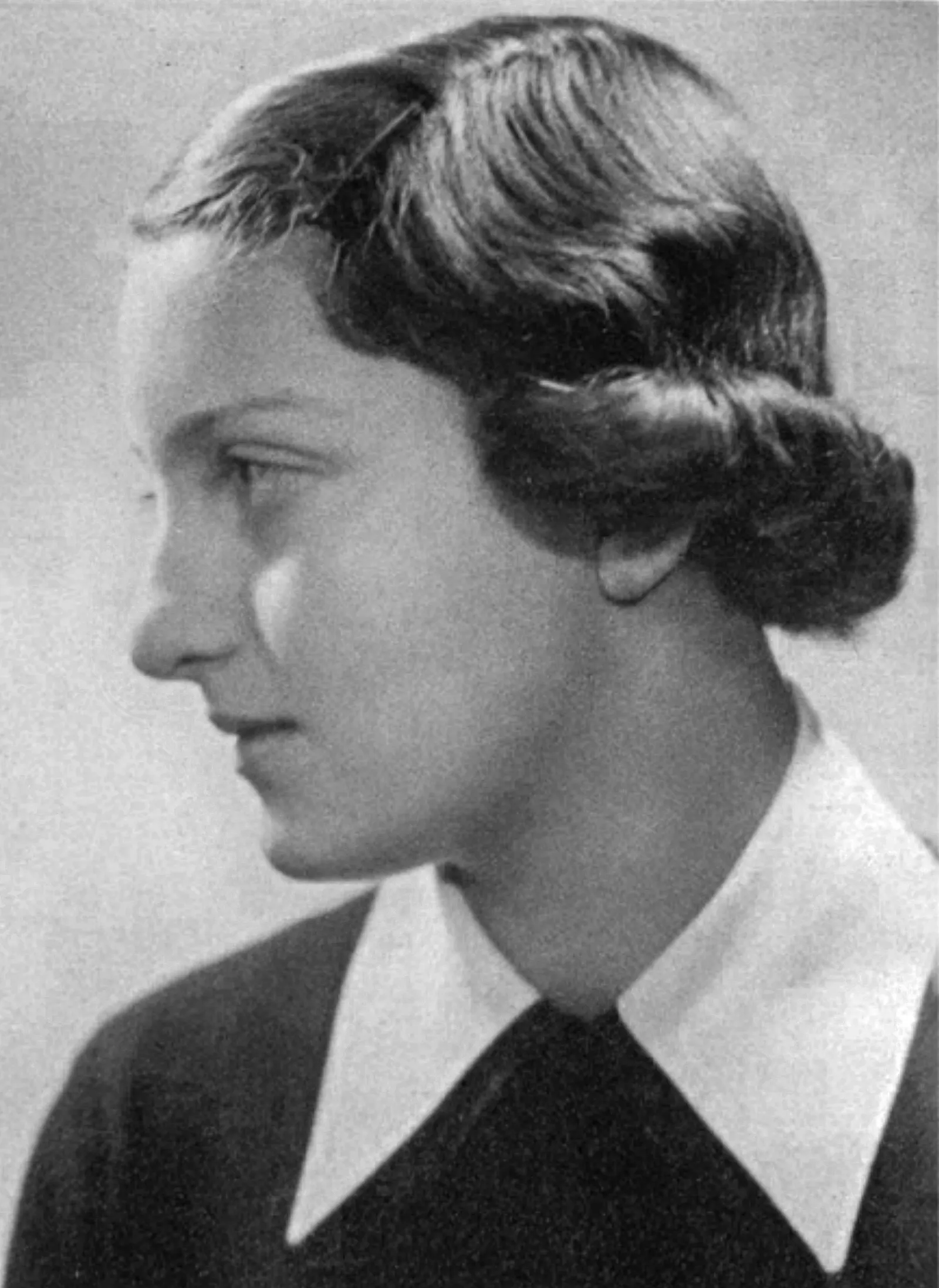
Childhood in Budapest
Hannah Szenes was born on 17 July 1921 in Budapest into an assimilated Jewish family (English Wikipedia, Jewish Virtual Library). Her father, Béla Szenes, a journalist and playwright, died when she was a child, and she was raised by her mother, Katalin, with her brother György (English Wikipedia).
She attended a Protestant girls' school and joined the Zionist youth movement Maccabea, where she began to learn Hebrew (English Wikipedia). According to the Jewish Virtual Library she began a diary at the age of 13 and kept it almost until her death.
Nahalal and Sdot Yam
After finishing school in 1939 she left Hungary for Mandatory Palestine to study at the Girls' Agricultural School in Nahalal (English Wikipedia, Jewish Virtual Library). In 1941 she joined Kibbutz Sdot Yam and then the Haganah (English Wikipedia). The Jewish Virtual Library says she wrote poetry there and a play about kibbutz life.
One of her poems, "A Walk to Caesarea", better known as "Eli, Eli", is today widely recited at memorial ceremonies (English Wikipedia). We give its history only, not its text.
The parachute mission, 1943 to 1944
In 1943 Szenes enlisted in the British forces and was recruited into the Special Operations Executive (SOE), and she trained as a parachutist in Egypt (English Wikipedia, Jewish Virtual Library). According to USHMM, the mission aimed to organise resistance to the Germans and to help rescue Allied personnel. Its numbers, as USHMM gives them:
| Stage | Number |
|---|---|
| Original volunteers | 250 |
| Underwent training | 110 |
| Parachuted into Europe | 32 |
| Entered by other routes | 5 |
| Sent to Hungary | 3 |
| Captured by the Germans | 12 |
| Executed | 7 |
Szenes parachuted into Yugoslavia on 14 March 1944 (English Wikipedia). After landing, the group learned that Germany had occupied Hungary, and the original plan was judged too dangerous, but she kept looking for a way across the border (English Wikipedia). The Jewish Virtual Library says she spent about three months with Tito's partisans, and dates her poem "Blessed Is the Match" to this period.
Capture, trial and execution
- 7 June 1944 She crossed into German-occupied Hungary and was captured almost at once (USHMM, Jewish Virtual Library). English Wikipedia says Hungarian gendarmes found her radio transmitter, and that her fellow parachutists Yoel Palgi and Peretz Goldstein were also arrested.
- June to October 1944 She was tortured in prison and interrogated in Budapest. She refused to give the code of the transmitter, even when her mother was arrested (English Wikipedia). USHMM says she never betrayed her comrades.
- 28 October 1944 She was tried for treason by a court of the Arrow Cross regime (English Wikipedia). The Jewish Virtual Library says she defended her actions and refused to ask for clemency.
- 7 November 1944 She was executed by firing squad in Budapest, aged 23 (USHMM, English Wikipedia, Jewish Virtual Library).
After the Cold War a Hungarian military court exonerated her, and her relatives in Israel were informed on 5 November 1993 (English Wikipedia). The Hebrew site has pages on Haviva Reik and on the parachutists from Palestine.
Burial, diary and memory
In 1950 her remains were brought to Israel and reburied on Mount Herzl in Jerusalem (English Wikipedia, Jewish Virtual Library). USHMM says the seven parachutists who died were buried in the National Military Cemetery in Jerusalem. Her original tombstone arrived in Israel in November 2007 and was placed at Sdot Yam (English Wikipedia).
Her diary was published in Hebrew in 1946 (English Wikipedia), and many of her poems were set to music (Jewish Virtual Library). Her life has been told on stage and screen:
- A play by Aharon Megged (Jewish Virtual Library).
- The Legend of Hannah Senesh, a stage work from 1964 (English Wikipedia).
- Hanna's War, a feature film, 1988 (English Wikipedia).
- Blessed Is the Match, a documentary film, 2008 (English Wikipedia).
For the wider story of Jewish fighters in the war see Jewish partisans. Yitzhak Arad reached Palestine in 1945 on an immigrant ship named after her; see Yitzhak Arad.
Questions people ask
Who was Hannah Szenes?
A young Jewish woman from Budapest who emigrated to Mandatory Palestine in 1939, volunteered for the British-backed parachute mission into occupied Europe, and was captured and executed in Hungary in 1944. She is also known for her poems and diary.
How did Hannah Szenes die?
She was captured when she crossed into Hungary on 7 June 1944, tortured and tried for treason, and shot by a firing squad in Budapest on 7 November 1944.
Where is Hannah Szenes buried?
On Mount Herzl in Jerusalem. Her remains were brought to Israel in 1950.
Is it Szenes or Senesh?
Both spellings are in use for the same person. English Wikipedia and USHMM write Szenes, and the Jewish Virtual Library writes Senesh.
Sources
- Hannah Szenes · English Wikipedia
- Jewish Parachutists from Palestine · United States Holocaust Memorial Museum (USHMM)
- Hannah Senesh · Jewish Virtual Library
Last checked against the sources on November 10, 2026. Found a mistake? Tell us.
Read next
- History · Overview
Jewish partisans in the Second World War
Who the Jewish partisans were, how many fought and where.
-
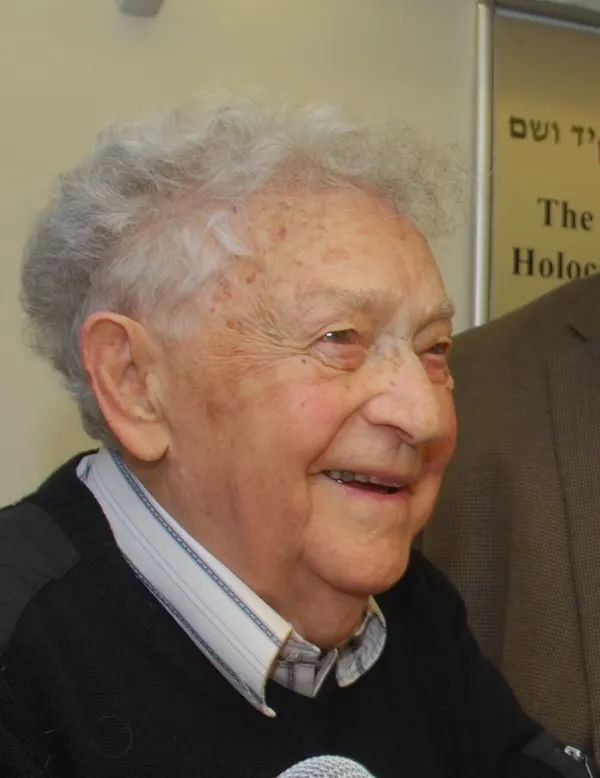 Švenčionys · Naroch forest · Israel
Yitzhak Arad
Ghetto underground member and Soviet partisan who became an IDF general, chairman of Yad Vashem and a leading historian.
- Family research · Archives and databases
How to find a partisan record
Where records of Jewish partisans and ghetto fighters are kept today, and how to search them.