Vilna · 1941 to 1944
The Vilna ghetto and the FPO
In the Vilna ghetto, young members of rival movements formed one of the first armed Jewish undergrounds of the war, the United Partisan Organization (FPO, Fareynikte Partizaner Organizatsye). When the ghetto was destroyed in September 1943, its fighters escaped to the forests and fought on as partisans.
Vilna before and after June 1941
In 1939 Vilna (Wilno, today Vilnius) had about 200,000 residents, more than 55,000 of them Jews, and 12,000 to 15,000 Jewish refugees from German-occupied Poland arrived soon after, according to USHMM. The city passed from Poland to Soviet rule, then to Lithuania, and in 1940 back to the Soviet Union.
Germany attacked the Soviet Union on 22 June 1941, and German forces took Vilna on 24 June. In July 1941 Einsatzgruppen units and Lithuanian auxiliaries shot about 5,000 Jewish men in the Ponary forest, about eight miles from the city, and at the end of August about 3,500 more. In early September the Germans set up two ghettos. In October ghetto no. 2, which held people deemed unable to work, was destroyed and its people killed at Ponary. By the end of 1941 about 40,000 Jews had been murdered there (USHMM). The Hebrew site covers the Vilna ghetto in more detail.
The call to resist
Members of the Zionist youth movements hid where they could. Abba Kovner and others sheltered for a time in a Dominican convent run by Anna Borkowska, then returned to the ghetto. On the night of 31 December 1941, according to the Jewish Partisan Educational Foundation (JPEF) and the Jewish Women's Archive (JWA), Kovner read aloud a manifesto that united the divided factions of the ghetto's youth movements behind armed resistance. It said that the Germans planned to destroy all the Jews of Europe, and that the only answer was revolt. English Wikipedia dates it to the start of 1942 and notes that its authorship is disputed.
Let us not go like sheep to the slaughter.
Abba Kovner's manifesto, Vilna ghetto, 31 December 1941 (as translated by the Jewish Women's Archive; other translations say "lambs")
The FPO is founded
The FPO was founded on 21 January 1942 at 6 Rudnicka Street in the ghetto, according to English Wikipedia. Its founders came from groups that were rivals before the war:
- Yitzhak Wittenberg, a communist, who was elected commander
- Abba Kovner, of the socialist Zionist Hashomer Hatzair
- Nissan Reznik, of the Zionist youth
- Josef Glazman, of the right-wing Revisionist Betar
Members of the Bund joined in the spring of 1942, and a separate group of Hehalutz-Dror under Yechiel Sheinbaum merged with the FPO in the spring of 1943 (English Wikipedia). JWA calls the FPO the only organisation in the ghettos that included all the Zionist youth movements. Members were organised in cells of five, platoons and battalions.
One of its first actions was outside the ghetto. Vitka Kempner studied the timetable of German military trains, and with Itzke Matzkevich laid explosives on the line and blew up a German train near Vilna (JWA).
1943: the Wittenberg affair and the end of the ghetto
| Date | Event |
|---|---|
| 15 July 1943 | Wittenberg is arrested; FPO fighters free him. |
| 16 July 1943 | Under threat that the ghetto would be destroyed, Wittenberg gives himself up to the Germans. He is found dead the next day, and Kovner becomes commander. |
| 24 July 1943 | Josef Glazman leads a group out to the Naroch forests. |
| 1 September 1943 | The FPO mobilises two battalions as deportations begin; one of about 100 people is destroyed. Its call to the ghetto to resist gets no response. |
| 23 and 24 September 1943 | Final liquidation of the ghetto (JWA). Children, the elderly and the sick are sent to Sobibor or shot at Ponary; men are sent to labour camps in Estonia and women to camps in Latvia (USHMM). |
The Wittenberg affair left a lasting mark. JWA quotes Vitka Kempner on the shock the fighters felt when it became clear that most of the remaining Jews in the ghetto supported handing over their commander. The Hebrew site has a page on Yitzhak Wittenberg.
Through the sewers to the forests
USHMM writes that some ghetto fighters escaped through the sewers to join the partisans in the Rudniki (Rudninkai) and Naroch forests. JPEF says Kovner sent most of the partisans, about 300, to the forest, while those who stayed with him fought briefly from abandoned buildings before escaping. According to JWA, Vitka Kempner moved between the ghetto and the outside through the sewers and led the last group of sixty fighters, including Kovner, to the forest.
In the Rudniki forest, Kovner, Kempner and Rozka Korczak led the Jewish unit known as the Avengers. JPEF credits it with destroying about 180 miles of railway track, 5 bridges and 40 train cars, killing 212 enemy soldiers and rescuing at least 71 Jews. JWA says the Jewish camp in the forest grew to six hundred people. Glazman's group fought in the Naroch forest.
In July 1944 FPO fighters took part in the Soviet offensive on Vilna. According to JPEF, Kovner and the surviving Avengers returned with the Red Army on 7 July 1944, and the city was taken from the Germans on 13 July.
A song and a legacy
In 1943 the young poet Hirsh Glick wrote "Zog nit keyn mol" for the FPO in the Vilna ghetto, inspired by news of the Warsaw Ghetto Uprising, to a melody by the Soviet composers Dmitri and Daniil Pokrass. Partisan groups across eastern Europe adopted it, and it became a standard memorial song (English Wikipedia). Its history is told on the Hebrew page The partisans' song.
Another name linked to Vilna's underground is Yitzhak Arad, a Soviet partisan in the Naroch forest who slipped into the Vilna ghetto in April 1943 to meet Kovner, and who later wrote a history of Vilna Jewry in the war.
Questions people ask
What was the FPO?
The Fareynikte Partizaner Organizatsye (United Partisan Organization) was the armed Jewish underground of the Vilna ghetto, founded on 21 January 1942 by members of communist, Zionist, Revisionist and later Bundist groups.
Who led the FPO?
Yitzhak Wittenberg was its first commander. After he gave himself up to the Germans in July 1943, Abba Kovner took command.
What happened at Ponary?
Ponary was a forest outside Vilna where Einsatzgruppen units and Lithuanian auxiliaries shot Vilna's Jews. USHMM says about 40,000 had been killed there by the end of 1941.
Did the Vilna ghetto rise up like Warsaw?
No. The FPO called on the ghetto to resist in September 1943, but the call went unanswered, and the fighters escaped to the forests to fight as partisans.
Sources
- Fareynikte Partizaner Organizatsye · English Wikipedia
- Vilna · USHMM Holocaust Encyclopedia
- Vitka Kempner-Kovner · Jewish Women's Archive
- Abba Kovner · Jewish Partisan Educational Foundation
- Zog nit keyn mol · English Wikipedia
Last checked against the sources on November 10, 2026. Found a mistake? Tell us.
Read next
-
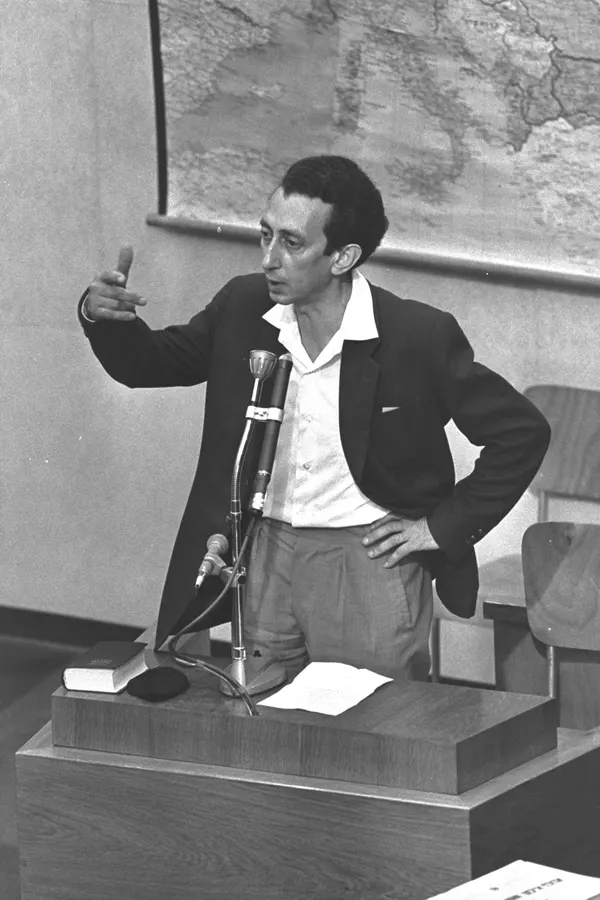 Vilna · Rudniki forest · Ein HaHoresh
Abba Kovner
Vilna ghetto underground leader, commander of the Avengers in the Rudniki forest, and Hebrew poet.
-
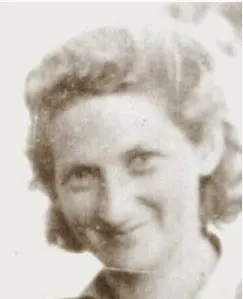 Kalisz · Vilna · Rudniki forest
Vitka Kempner
Vilna ghetto fighter who carried out the FPO's first sabotage and led patrols in the Rudniki forest.
-
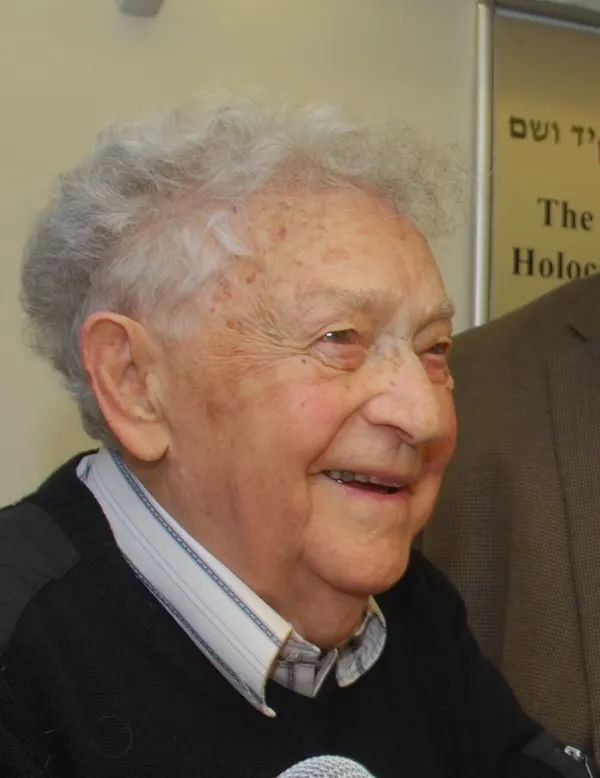 Švenčionys · Naroch forest · Israel
Yitzhak Arad
Ghetto underground member and Soviet partisan who became an IDF general, chairman of Yad Vashem and a leading historian.