Warsaw · 19 April to 16 May 1943
The Warsaw Ghetto Uprising
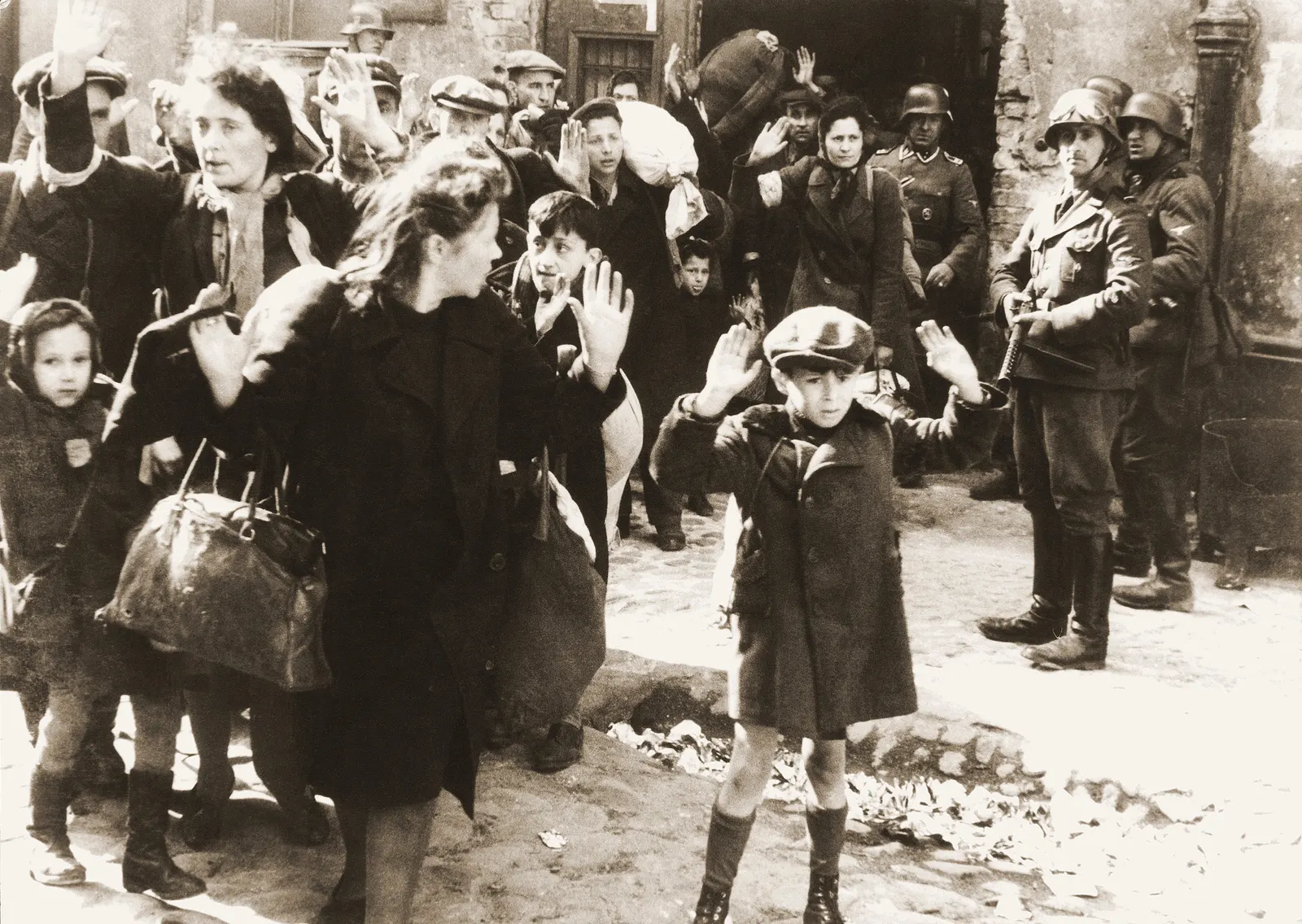
On 19 April 1943, the eve of Passover, Jewish fighters in the Warsaw ghetto opened fire on German forces sent to deport the last Jews of the ghetto. The Warsaw Ghetto Uprising lasted 27 days and was the largest Jewish uprising of the Second World War.
Background: the ghetto and the great deportation
The Germans set up the Warsaw ghetto in October 1940 and sealed it in November 1940, with about 400,000 Jews inside, according to USHMM. Between 22 July and 21 September 1942, in what USHMM calls the "Great Action", about 265,000 Jews were deported to the Treblinka killing centre and murdered, and about 35,000 more were killed inside the ghetto. English Wikipedia gives the deportation figure as more than a quarter of a million.
By early 1943 only about 70,000 to 80,000 Jews were left (USHMM). Those who remained knew what deportation meant. The Hebrew site has more on the Warsaw ghetto itself.
The fighting organisations
Two underground groups prepared to fight:
- The Jewish Combat Organization (ZOB, Zydowska Organizacja Bojowa), a left-wing organisation formed on 28 July 1942. It started with about 200 members and had about 500 fighters by the uprising, according to USHMM. Estimates in English Wikipedia range from about 220 (Marek Edelman's figure) to about 600. Its commander was Mordechai Anielewicz, then 24. See the Hebrew page on the ZOB.
- The Jewish Military Union (ZZW, Zydowski Zwiazek Wojskowy), organised by the Revisionist Zionist movement and its youth group Betar. USHMM puts its strength at about 250 fighters; English Wikipedia cites about 400. See the Hebrew page on the ZZW.
Other leaders included Marek Edelman, the ZOB deputy commander who survived, Yitzhak Zuckerman and Zivia Lubetkin, and Pawel Frenkiel, who was killed in action.
January 1943: the first armed resistance
On 18 January 1943 the Germans began a second deportation. Fighters of the ZOB and ZZW attacked them, and the Germans suspended the deportation on 21 January. USHMM says they had seized about 5,000 to 6,500 people by then. English Wikipedia says about 1,200 Jews were killed and about 5,000 deported, instead of the 8,000 planned.
The uprising, day by day
| Date | Event |
|---|---|
| 19 April 1943 | On the eve of Passover, German forces enter the ghetto to deport the remaining Jews and are ambushed. Himmler replaces the SS commander Ferdinand von Sammern-Frankenegg with Jurgen Stroop the same day. |
| The following days | Stroop's forces burn and demolish the ghetto block by block to drive people out of their bunkers. |
| 8 May 1943 | The Germans take the ZOB headquarters bunker at 18 Mila Street. Anielewicz and many of his staff are thought to have taken their own lives. |
| About 10 May 1943 | Marek Edelman and a group of fighters escape through the sewers (English Wikipedia). |
| 16 May 1943 | Stroop blows up the Great Synagogue on Tlomackie Street and declares the operation over. |
| Until 5 June 1943 | Scattered resistance continues in the ruins, according to English Wikipedia. |
The fighters were armed mostly with pistols and home-made grenades, with a few rifles and automatic weapons, according to USHMM. Against them Stroop had about 2,000 soldiers and police, with artillery and tanks.
The cost
Figures for both sides are disputed, and the sources give them differently:
- Jewish deaths: USHMM says at least 7,000 Jews died fighting or in hiding in the ghetto. English Wikipedia says at least 13,000 were killed, about 6,000 of them burned alive or killed by smoke.
- Deportations: about 7,000 captured Jews were sent to Treblinka and murdered, and about 42,000 to the Poniatowa, Trawniki and Lublin/Majdanek camps, where most were murdered in November 1943 in Operation Harvest Festival (USHMM).
- Stroop's tally: his report claims 56,065 Jews killed or captured. The historian Israel Gutman considered the total inflated (English Wikipedia).
- German losses: Stroop reported 16 killed and 93 wounded. Edelman spoke of about 300 Germans killed and wounded. Historians disagree about which is closer (English Wikipedia).
Stroop's illustrated report to Himmler, dated 24 May 1943, became a key record of the uprising; its cover bears the markings of the International Military Tribunal at Nuremberg. Stroop was convicted of war crimes and hanged in Poland in 1952.
Why it is remembered
USHMM calls the uprising the largest Jewish uprising of the war and the first urban uprising in German-occupied Europe, and notes that it inspired revolts in other ghettos, such as Bialystok. In Warsaw stands the Monument to the Ghetto Heroes by Nathan Rapoport, where the West German chancellor Willy Brandt knelt on 7 December 1970.
For the wider story of Jewish armed resistance, see Jewish partisans and The Vilna ghetto and the FPO.
Questions people ask
When did the Warsaw Ghetto Uprising start and end?
It began on 19 April 1943, the eve of Passover, and the Germans declared it over on 16 May 1943, when they blew up the Great Synagogue. Scattered resistance went on until early June.
Who led the Warsaw Ghetto Uprising?
Mordechai Anielewicz commanded the Jewish Combat Organization (ZOB). The Jewish Military Union (ZZW) fought separately. Marek Edelman, Yitzhak Zuckerman and Zivia Lubetkin were among the other leaders.
How many fighters took part?
USHMM speaks of about 700 young Jewish fighters: about 500 in the ZOB and about 250 in the ZZW. Other estimates in English Wikipedia differ.
Is the Warsaw Ghetto Uprising the same as the 1944 Warsaw Uprising?
No. The ghetto uprising was fought by Jews in April and May 1943. The Warsaw Uprising of 1944, a year later, was led by the Polish Home Army.
Sources
- Warsaw Ghetto Uprising · USHMM Holocaust Encyclopedia
- Warsaw Ghetto Uprising · English Wikipedia
- Jewish partisans · English Wikipedia
Last checked against the sources on November 10, 2026. Found a mistake? Tell us.
Read next
- History · Overview
Jewish partisans in the Second World War
Who the Jewish partisans were, how many fought and where.
- Vilna · 1941 to 1944
The Vilna ghetto and the FPO
The Vilna ghetto underground, from Kovner's call to the escape through the sewers.
-
 וישקוב · ורשה · מילא 18
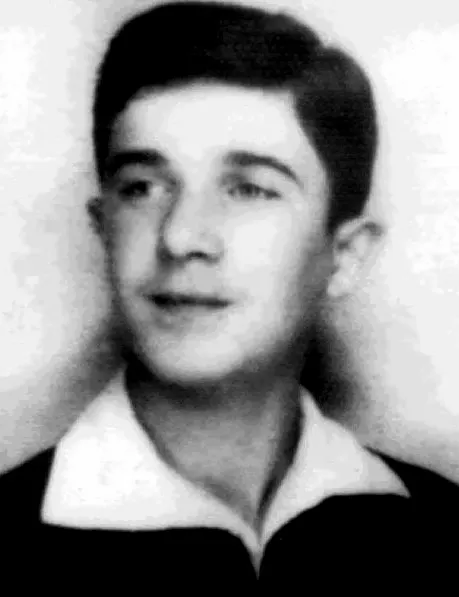
מרדכי אנילביץ'
מפקד הארגון היהודי הלוחם במרד גטו ורשה, שנפל בבונקר מילא 18 במאי 1943.