Švenčionys · Naroch forest · Israel
Yitzhak Arad
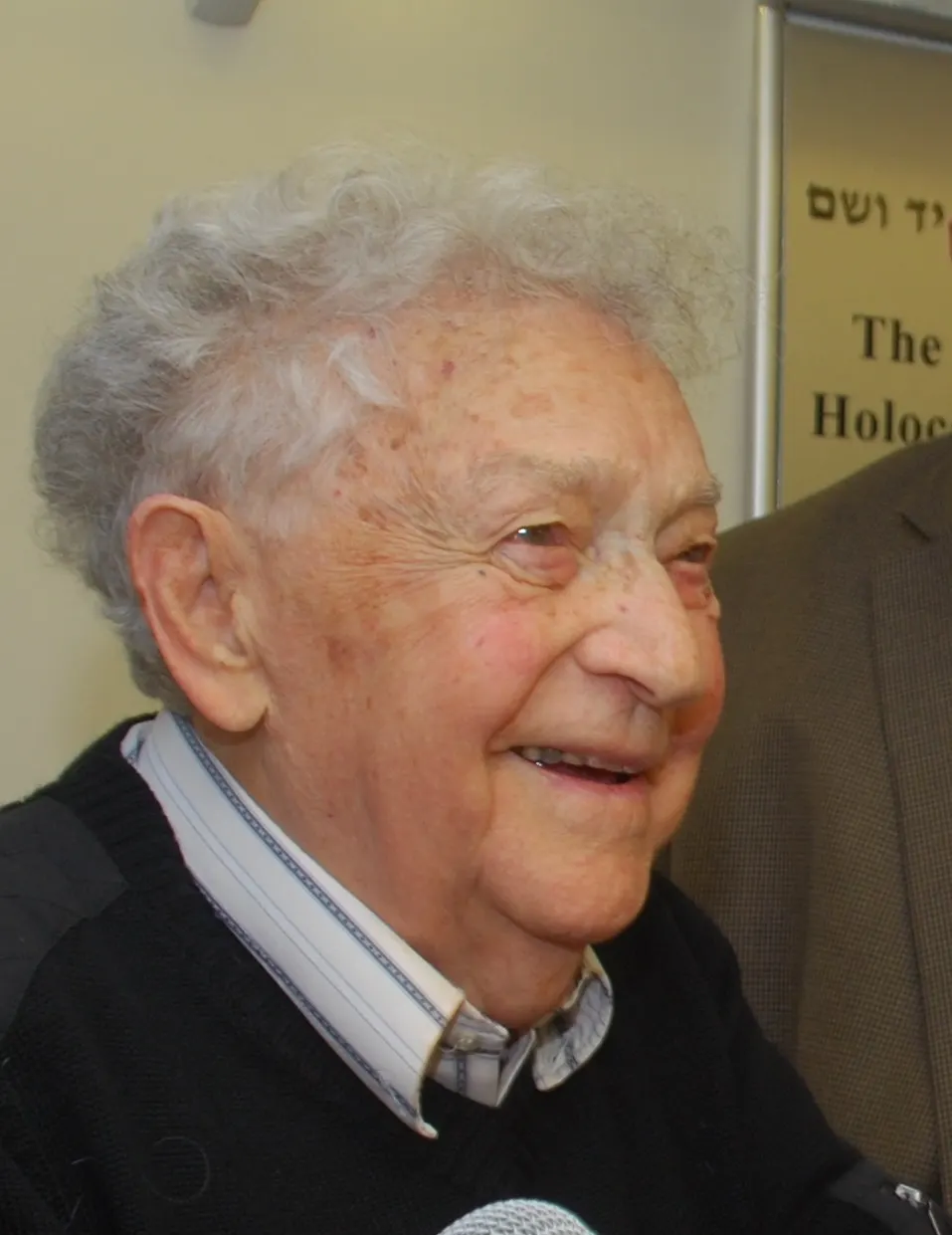
Yitzhak Arad, born Yitzhak Rudnicki in 1926 in Švenčionys, fought as a teenager in the ghetto underground and with Soviet partisans in the forests of Belorussia. In Israel he became a brigadier general, chaired the Yad Vashem Directorate from 1972 to 1993, and wrote some of the standard histories of the Holocaust in the East. He died on 6 May 2021.
Childhood in Švenčionys and Warsaw
Yitzhak Arad was born Yitzhak (Icchak) Rudnicki on 11 November 1926 in Święciany, a town then in Poland and today Švenčionys in Lithuania (English and Hebrew Wikipedia). Hebrew Wikipedia says his father was a cantor who sang in the synagogue, and that the boy studied at Tarbut and Yavne schools and then at the Tachkemoni high school in Warsaw. English Wikipedia adds that he belonged to the Zionist youth movement Ha-No'ar ha-Tsiyyoni.
His parents were murdered in the Holocaust (Times of Israel). Arad himself later said that his family and his people had been murdered by Germans and their Lithuanian collaborators (English Wikipedia).
The ghetto underground
After escaping the first mass killing in his home town, Arad lived in the local ghetto. There he led an underground group that stole weapons from German army depots (Hebrew Wikipedia). In a 1993 interview quoted by English Wikipedia he dated his underground activity to 1942 to 1944.
In April 1943 he went into the Vilna ghetto to meet Abba Kovner, the leader of the underground there (Hebrew Wikipedia). For the story of that underground see The Vilna ghetto and the FPO.
A Soviet partisan in the Naroch forests
In February 1943 Arad and his group left for the forest. The two Wikipedia articles describe the first step differently, so both versions are given here:
- Hebrew Wikipedia: the group first joined a Soviet partisan unit named after Chapaev near Vilna, and Arad later moved to a Lithuanian partisan unit in the Markov Brigade, which operated in Belorussia.
- English Wikipedia: he joined the Soviet Markov Brigade in February 1943 and fought around the Naroch forest, in today's Belarus, until the end of the war.
Among the partisans he went by the name "Tolka" (Hebrew Wikipedia) or "Tolya" (English Wikipedia). He received the Partisan Medal, First Class (Hebrew Wikipedia). Times of Israel, in an obituary from the Associated Press, says he joined the Soviet partisans in 1943 at the age of 16 and fought in Belarus and Lithuania until the war ended.
Read more about Jews in the forest units on Jewish partisans.
Palestine, the Palmach and the IDF
In December 1945 Arad reached Mandatory Palestine as an illegal immigrant on the ship named after Hannah Szenes (English and Hebrew Wikipedia). He then served in the Palmach and the Israel Defense Forces:
| Year | Step | Source |
|---|---|---|
| 1946 | Joined a Palmach course and taught sabotage | Hebrew Wikipedia |
| 1948 | Demolition officer in Operation Nachshon; fought in Jerusalem with the Palmach's 5th battalion | Hebrew Wikipedia |
| After 1948 | Company commander in the 7th Brigade, then battalion commander; after the Sinai Campaign commander of tank battalion 227 | Hebrew Wikipedia |
| July 1968 | Appointed Chief Education Officer of the IDF | Hebrew Wikipedia |
| 1972 | Retired as a brigadier general (Tat-Aluf) | English and Hebrew Wikipedia |
| 1973 | Returned for three months of service in the Yom Kippur War | Hebrew Wikipedia |
Times of Israel says he served mainly in the armoured corps.
Chairman of Yad Vashem and historian
From 1972 to 1993 Arad was chairman of the Yad Vashem Directorate, for 21 years, and he later stayed on as vice-chairman of the Yad Vashem Council (English Wikipedia, Times of Israel).
He studied history and political science at Tel Aviv University and received his doctorate there in 1974, with a thesis on the destruction of the Jews of Vilna supervised by Daniel Carpi (Hebrew Wikipedia). He lectured on Jewish history at Tel Aviv University (English Wikipedia) and was a guest professor at Yeshiva University in New York (Times of Israel).
Among his books (English and Hebrew Wikipedia):
- Vilna Jewry in Struggle and Destruction (Hebrew, 1976).
- The Partisan: From the Valley of Death to Mount Zion (1979).
- Ghetto in Flames (1980).
- Belzec, Sobibor, Treblinka (1987).
- History of the Holocaust: Soviet Union and the Annexed Territories, which won Yad Vashem's Buchman Prize in 2004 (Times of Israel), and The Holocaust in the Soviet Union (2009), which won a National Jewish Book Award.
- In the Shadow of the Red Banner (Hebrew 2008, English 2010), which won the Yitzhak Sadeh Prize for military literature.
- As editor: Documents on the Holocaust (1982, with Israel Gutman and Abraham Margaliot), The Einsatzgruppen Reports (1989), and the Ponary Diary, 1941-1943 of Kazimierz Sakowicz (2005).
The Lithuanian investigation
In 2006 a Lithuanian newspaper accused Arad of involvement in the killing of civilians at Koniuchy by Soviet partisans, and Lithuanian prosecutors opened an investigation (English Wikipedia). English Wikipedia says the investigation was dropped in the autumn of 2008 after international protest; Hebrew Wikipedia dates the start of the police investigation to 2008, says it began at the request of far-right groups, and adds that Yad Vashem called it a worrying sign of history being rewritten. Arad denied killing civilians or prisoners. According to Hebrew Wikipedia he did not enter Lithuania again until his death.
Death, and the old partisans database
Yitzhak Arad died on 6 May 2021, aged 94, and was buried at the Einat cemetery (Hebrew Wikipedia; Times of Israel). He was survived by children, grandchildren and great-grandchildren (Times of Israel).
Many links to Arad from Wikipedia once pointed to his card in the old partisans database that lived at this address, a project of the Ghetto Fighters' House. That database is offline, and this site is independent and not linked to the Ghetto Fighters' House. To look for records of other partisans, see Find a partisan record; the story of the old database is on the About page.
Questions people ask
When and where was Yitzhak Arad born?
On 11 November 1926 in Święciany, then in Poland and today Švenčionys in Lithuania. His birth name was Yitzhak Rudnicki.
Which partisan unit did Yitzhak Arad fight in?
He fought with Soviet partisans from February 1943, in the Markov Brigade around the Naroch forest. Hebrew Wikipedia says he first joined a unit named after Chapaev and later moved to a Lithuanian unit of the Markov Brigade.
How long was Yitzhak Arad chairman of Yad Vashem?
For 21 years, from 1972 to 1993. He later served as vice-chairman of the Yad Vashem Council.
When did Yitzhak Arad die?
On 6 May 2021, at the age of 94.
Sources
- Yitzhak Arad · English Wikipedia
- יצחק ארד · Hebrew Wikipedia
- Holocaust survivor who led Yad Vashem memorial dies at 94 · Times of Israel (Associated Press)
Last checked against the sources on November 10, 2026. Found a mistake? Tell us.
Read next
-
 Vilna · Rudniki forest · Ein HaHoresh
Abba Kovner
Vilna ghetto underground leader, commander of the Avengers in the Rudniki forest, and Hebrew poet.
- Vilna · 1941 to 1944
The Vilna ghetto and the FPO
The Vilna ghetto underground, from Kovner's call to the escape through the sewers.
- History · Overview
Jewish partisans in the Second World War
Who the Jewish partisans were, how many fought and where.
- Family research · Archives and databases
How to find a partisan record
Where records of Jewish partisans and ghetto fighters are kept today, and how to search them.